

7 Best Supplements & Vitamins for Eczema in 2026
Kate Aloha From SkinIf you've tried steroid creams, dozens of moisturizers, and an elimination diet or two — and your eczema still flares — you already know the problem isn't just on your skin.
It's what's happening underneath it: gut imbalance, immune overreaction, or a deficiency your bloodwork hasn't caught yet.
These are the best supplements for eczema with real research behind them in 2026 — what each one actually does, who it helps most, and which popular "eczema supplements" aren't worth your money.
Here's where to start — ranked by how strong the evidence actually is, starting with the one most people overlook first:
← Scroll horizontally to see full breakdown →
| Supplement / Vitamin | Key Benefit | Best Used For | Evidence Level |
|---|---|---|---|
| Histamine-Safe Probiotics | Calms immune overreaction via gut-skin axis | Chronic, hard-to-clear eczema; gut imbalance; allergy-like symptoms | ★★★★★ (Strong) |
| Vitamin D3 | Supports skin barrier repair & immune response | Winter flares, low blood levels | ★★★★★ (Strong) |
| Omega-3 (EPA/DHA) | Reduces inflammatory leukotriene B4 | Dry, inflamed, cracking skin | ★★★★☆ (Moderate-High) |
| Gut & Liver Detox Blend | Clears toxins, parasites & heavy metals feeding chronic flares | Sluggish digestion, bloating, irregular bowel movements | ★★★★☆ (Traditional Use) |
| Collagen Peptides | Structural support & hydration for damaged skin barrier | Slow-healing, thin skin | ★★★☆☆ (Emerging) |
| L-Glutamine | Repairs gut lining, reduces permeability | Leaky gut, digestive symptoms, stress-linked flares | ★★★☆☆ (Moderate) |
| Vitamin B12 | Corrects deficiency-driven flare-ups | Severe, treatment-resistant eczema | ★★☆☆☆ (Targeted) |

1. Probiotics: The #1 Natural Supplement for Eczema & Gut Health
Of all seven, this is the one with the most consistent research behind it — and the one most people never think to try.
Multiple studies have found that adults with eczema have measurably different gut bacteria than people with clear skin. Your gut isn't just about digestion — it's where more than two-thirds of your immune cells live, and it plays a direct role in training how your immune system responds to everything from food to pollen to your own skin.
“The gut helps 'train' the immune system. When the gut contains a healthy mix of beneficial bacteria, those microbes produce short-chain fatty acids that act as calming signals, traveling through the bloodstream to support the gut lining and regulate the immune system.”
— Dr. John Browning, pediatric dermatologist
When that balance is off, the immune system has no calming signal to fall back on — and everyday triggers start showing up as flare-ups on your skin.
How to Choose a Good Probiotic for Eczema
Not all probiotics are built the same, and generic gut-health formulas aren't designed with eczema-prone, reactive skin in mind. Before choosing one, look for:
- Strain diversity — a single strain rarely moves the needle; look for a formula with multiple studied strains, not just one
- CFU count — most research uses formulas in the billions of CFU per serving, not the low millions found in many drugstore brands
- Histamine-safe strains — this matters more for eczema than for general gut health. Some common probiotic strains actually produce histamine, which can make itching and flare-ups worse in histamine-sensitive people. Look specifically for strains selected to be low-histamine or histamine-safe
- Allergen-free formulation — since many people with eczema also deal with food sensitivities, a formula free of common allergens (dairy, soy, gluten) matters more here than it would for the average supplement
This is essentially the checklist EczProbiotic was built around — a formula trusted by 5,000+ customers dealing with eczema, rated 4.8/5 across 350+ verified reviews.
It combines 13 histamine-safe bacterial strains — selected specifically because common eczema triggers include both gut imbalance and histamine sensitivity — in an allergen-free base.

In a 2024 customer feedback survey conducted by Aloha From Skin:
- 44% reported fewer eczema flare-ups within the first 35 days
- 82% said their skin looked healthier, less dry, and more resilient with regular use
- 37% also noticed improvements in sleep quality and nighttime itching

“Before and after one month on EczPro. After two years of trial and error, finally something that really helped.”
— Debra W.
Backed by a 30-day money-back guarantee — if it's not for you, you don't pay for it.

2. Vitamin D3: The Best Vitamin for Eczema & Skin Barrier Repair
Of all the vitamins studied for eczema, vitamin D has some of the most promising evidence behind it.
Vitamin D supports:
- normal immune regulation
- skin-cell growth and renewal
- antimicrobial defenses
- skin barrier function
Low vitamin D levels have often been associated with more severe atopic dermatitis, although that does not prove low vitamin D is the original cause. A 2024 meta-analysis of randomized trials concluded that vitamin D supplementation reduced eczema severity in children and adults, while also emphasizing that larger and longer studies are still needed.
This makes vitamin D particularly worth considering when:
- you live in an area with limited winter sunlight
- you spend little time outdoors
- you have darker skin
- you are over 50
- you have a confirmed low blood level
- your eczema consistently worsens in winter

One Reddit user's experience combining vitamin D3 and omega
What's the Correct Vitamin D Level?
Most labs consider a blood level of 30 ng/mL (75 nmol/L) or higher "sufficient," with anything under 20 ng/mL classified as a deficiency.
There's no research-confirmed "ideal number" specifically for eczema — but since low levels are consistently linked to more severe symptoms, getting out of the deficient range is a reasonable first target.
Aloha From Skin's Vitamin D3 delivers 2,000 IU per softgel, rated 4.8/5 across 54 customer reviews.
★★★★★
“I tested my vitamin D levels after a few months, and they're finally where they should be. This product really works.”
— Isabel P., Aloha From Skin customer

3. Fish Oil & Omega-3s: Essential Eczema Treatment Supplements
Omega-3 fatty acids—specifically EPA and DHA—go straight after one of the root drivers of eczema flare-ups: inflammation.
- They block the production of leukotriene B4, an inflammatory compound directly linked to eczema flare-ups.
- People with eczema consistently test with lower EPA and DHA levels than people with clear skin.
- In a controlled study, participants who took 1.8g of EPA daily saw a significant reduction in eczema symptoms.
- Omega-3 works best in balance with omega-6—modern diets run roughly 15x higher in omega-6 than what our bodies evolved on, which pushes the body toward more inflammation, not less.
You don't have to take our word for it.
Here's what people are saying in the eczema community online:

Stories like these aren't proof on their own—but they line up with exactly what the research above points to: EPA-rich fish oil can meaningfully calm inflammation in eczema-prone skin.
Not all fish oil is created equal. Aloha From Skin's Omega-3 skips the fillers and additives common in cheaper softgels, delivering a clean 180mg EPA / 120mg DHA dose per serving — non-GMO, gluten-free, and nothing else added.


4. All-In Cleanse: Natural Detox & Eczema Diet Supplements
For some people, eczema keeps flaring no matter how consistent they are with creams, diet changes, and standard anti-inflammatory supplements...
Because the trigger isn't inflammation itself, but something further upstream: a gut and liver that are overloaded and can't clear what they should.
Parasites, heavy metals, and everyday toxin exposure don't always cause obvious digestive symptoms. Sometimes the only sign is skin that won't calm down, no matter what you put on it.
How All-In Cleanse Works
All-In Cleanse combines 11 herbs traditionally used across gut, liver, and detox support, built around a few key players:
- Black Walnut Hulls — contain juglone, a compound used for centuries for its natural antiparasitic properties
- Papaya Fruit — delivers papain, an enzyme that breaks down the protein structures parasites rely on to survive
- Chlorella — a freshwater algae studied for binding heavy metals like mercury in the gut, helping the body clear them before they recirculate
- Slippery Elm Bark — soothes and coats the gut lining, supporting repair of a barrier that inflammation and toxin exposure can wear down
- Ginger Root — calms gut inflammation and improves motility, creating an environment less hospitable to unwanted organisms
No harsh stimulant laxatives. No extreme protocols — just a plant-based formula working with your body's own detox pathways rather than forcing them.
★★★★★
“Suffering with a terrible eczema flareup on my hand — it has helped and given me peace of mind that I'm getting rid of the parasites and trying to help the gut problem where the source is coming from. Ready to order again.”
— Linda F., verified customer
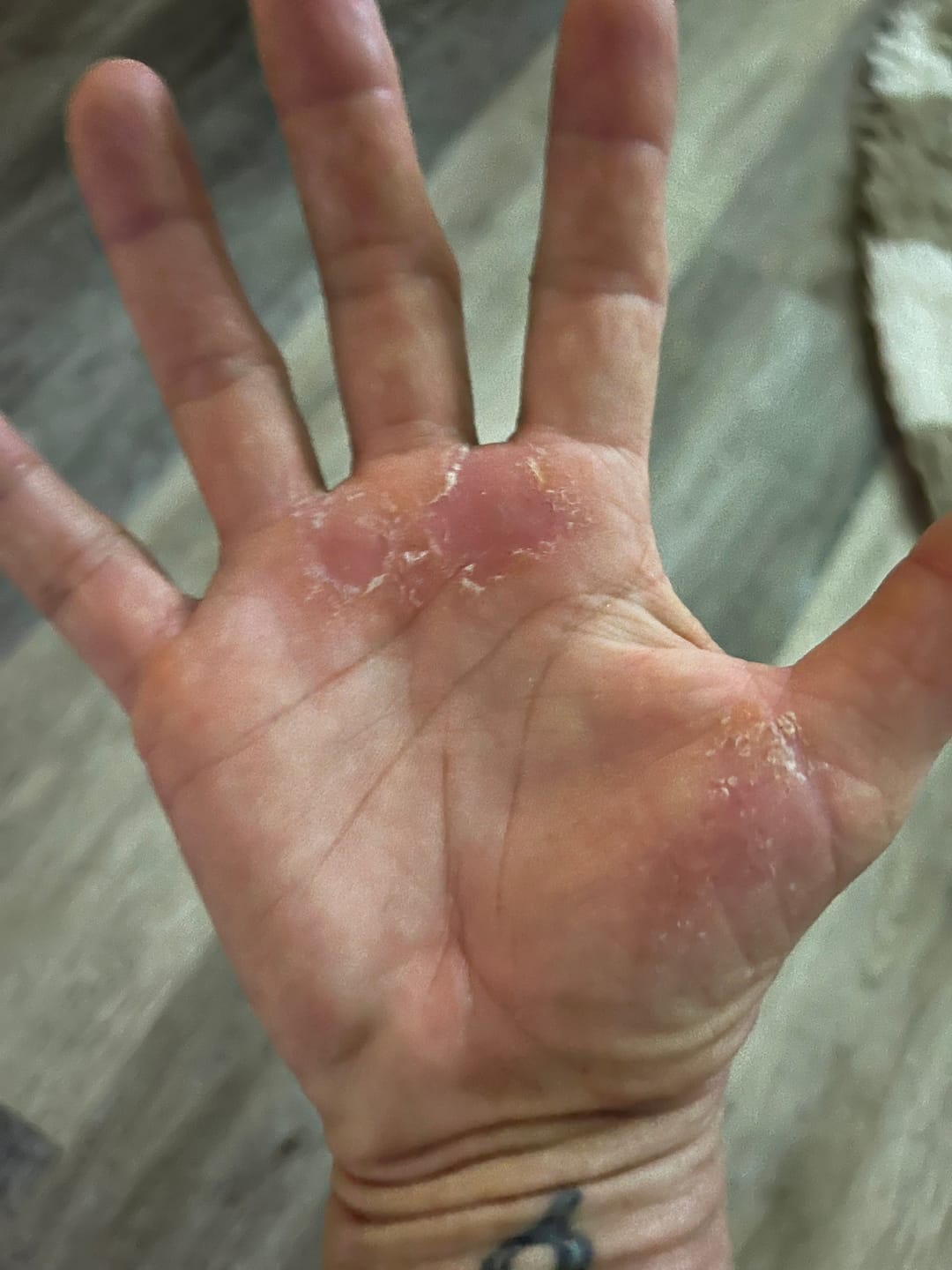
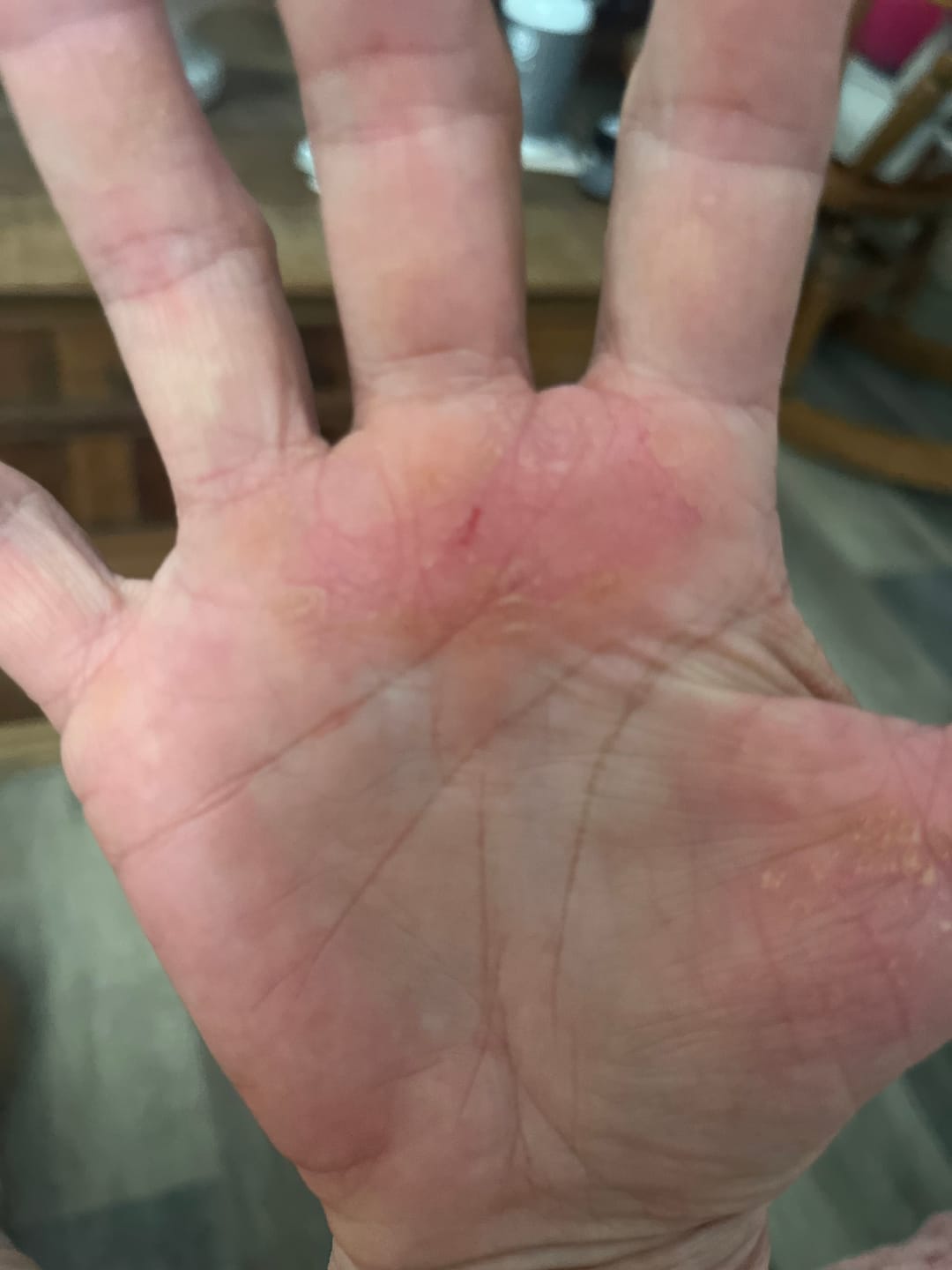
Linda's hands, before and after adding All-In Cleanse to her routine.


5. Collagen: Natural Supplement for Skin Health & Eczema Repair
Eczema-prone skin isn't just reactive. It's structurally different.
A 2024 study published in the International Journal of Molecular Sciences found that skin affected by atopic dermatitis has measurably lower levels of type I, III, and IV collagen — the exact proteins that form the scaffolding underneath your skin barrier. Less collagen means a weaker structure, and a weaker structure means moisture escapes faster and irritants get in easier. That's not a theory. That's what's happening at the cellular level, right now, in eczema-prone skin.
How Collagen Helps Eczema-Prone Skin
- Hydration — a 12-week randomized, placebo-controlled trial found daily collagen peptide supplementation significantly increased skin hydration compared to placebo
- Elasticity — the same study measured real improvement in skin elasticity and a visible reduction in wrinkling after 12 weeks
- Barrier strength — separate clinical trials found oral collagen peptides raise natural moisturizing factor (NMF) levels in the skin's outer layer and reduce transepidermal water loss — the exact mechanism that breaks down in eczema-prone skin
It's not just clinical literature saying this. Search the eczema community online and you'll find no shortage of people reporting the same thing on their own:

One of many similar reports from the eczema community
Put plainly: collagen isn't cosmetic. It's structural. If the skin around your flare-ups is thinner, drier, and slower to repair than it should be, that's not bad luck — it's biology, and it's one your body can rebuild.
Early research on collagen-derived peptides specifically in atopic dermatitis is still preliminary, but the direction is consistent: less collagen, weaker barrier, more flare-ups.
Rebuilding that structure is one of the few things you can actually influence — no cream, no steroid, just raw material your skin uses to repair itself.

6. L-Glutamine: Rebuilding Gut Barrier to Prevent Eczema Flare-Ups
Eczema puts two separate demands on your body's glutamine supply at once: broken, inflamed skin that needs raw material to repair itself, and — in many cases — a gut lining that's more permeable than it should be.
Many people with eczema show that exact pattern: a "leaky" gut barrier that lets more of what your immune system treats as a threat slip into your bloodstream, adding fuel to the same inflammation that shows up on your skin.
If you want to understand that connection in more depth, Does Leaky Gut Cause Eczema? breaks down exactly how a compromised gut lining can trigger flare-ups.
L-glutamine is the most abundant amino acid in your body, and under normal conditions, you make enough of it on your own.
But stress, poor diet, illness, and ongoing inflammation burn through your reserves faster than your body can replace them — right when your gut (and your skin) need it most.
How L-Glutamine Supports Skin Health From Within
- Supports Tissue Repair — your body's demand for glutamine rises during wound healing and recovery from skin damage
- Supports immune function — glutamine is also a primary fuel source for immune cells, and roughly 70-80% of your immune activity is connected to the gut
- Fuels and repairs the cells lining your intestinal wall — enterocytes use glutamine as their primary energy source
- Strengthens the tight junctions between gut cells, the seal that's supposed to keep undigested particles, toxins, and bacteria contained instead of leaking into your bloodstream
In a randomized, double-blind, placebo-controlled trial published in Gut, researchers gave 106 adults with increased intestinal permeability either 15g of glutamine daily or a placebo for 8 weeks. The glutamine group's intestinal permeability normalized — the placebo group's did not — along with significantly better symptom scores across every measure tracked.
Aloha From Skin's L-Glutamine is a clean, unflavored powder with minimal added ingredients — stir it into water, a smoothie, or your morning drink, and it dissolves without changing the taste.


7. Vitamin B12: Essential Vitamin Good for Skin Health & Eczema
There's not enough evidence to recommend B12 to everyone with eczema. But one case report explains why testing is worth considering in stubborn cases.
An 18-year-old with severe, treatment-resistant eczema turned out to have a very low B12 level. His symptoms improved with B12 supplementation, worsened when his levels dropped again, and improved once more when supplementation restarted — a pattern that's hard to explain as coincidence.
When B12 Testing Is Worth Discussing
- unusual fatigue or weakness
- pale skin, numbness, or tingling
- a sore or smooth tongue
- long-term use of acid-reducing medication
- vegan or nearly vegan eating
- eczema that hasn't responded to standard treatment
People over 50 also absorb less B12 from food naturally — worth keeping in mind if you fall into that group.
One case doesn't prove B12 treats eczema. But correcting a real deficiency, if one exists, is a low-risk step with a clear rationale behind it — worth ruling in or out before spending money on less-targeted supplements.
Read the Full B12 Case Study →
Key Vitamins & Minerals for Skin Health and Eczema Repair
When looking for vitamins to help eczema, it helps to understand how specific nutrients interact with your skin's repair systems — including a few that didn't make the main list above.
Vitamins for skin repair:
Vitamin D3 supports antimicrobial peptide production in the skin barrier (see #2 above). Vitamin C is the nutrient most people overlook here — it's a direct cofactor your body needs to build collagen, the same structural protein covered in the collagen section. Without enough of it, collagen synthesis slows down no matter how much collagen you're taking. Good sources include citrus fruits, bell peppers, strawberries, and broccoli.
Zinc plays a real role in skin barrier integrity and immune regulation, and several studies have found lower zinc levels in people with eczema compared to people without it. Zinc is essential for wound healing and tissue repair at the cellular level — you'll find it in oysters, beef, pumpkin seeds, and chickpeas.
B-complex vitamins, particularly B2 (riboflavin), support the cellular energy production your skin relies on for normal turnover and repair — the constant process of shedding old cells and building new ones.
Vitamins that help fight eczema inflammation:
Omega-3s (see #3 above) work directly on inflammatory pathways. Alongside them, Vitamin E is a fat-soluble antioxidant often found in the same oils, helping neutralize the oxidative stress that builds up around inflamed skin.
Vitamins to prevent eczema flare-ups:
Maintaining optimal vitamin D levels and supporting your gut microflora (see #1 and #6 above) helps regulate systemic inflammation before it shows up as a flare. Magnesium fits here too — it supports nervous system regulation and sleep, which matters because stress and poor sleep frequently amplify eczema itching.
Combining vitamins with an eczema diet:
Supplements work best alongside an eating pattern that supports the same systems. That generally means:
- Fatty fish (salmon, mackerel, sardines) for omega-3s
- Colorful fruits and vegetables for vitamin C and antioxidants
- Nuts and seeds for zinc and magnesium
- Fewer high-histamine foods if you're histamine-sensitive (see #1 above)
- Fiber-rich, gut-supportive foods to keep your microbiome in balance
Eczema diet supplements work as a complement to that foundation, not a replacement for it.

Supplements With Weaker Evidence (Worth Knowing, Not Worth Prioritizing)
Not every supplement people ask about earned a spot in the list above — here's an honest look at the rest.
Flaxseed oil provides a plant-based omega-3 (ALA), but the body converts only a small fraction of it into the active forms (EPA/DHA) that fish oil delivers directly. Reasonable for a plant-based diet, less efficient than fish oil for eczema specifically.
Evening primrose oil has been popular for decades, but a Cochrane review of 27 trials and nearly 1,600 participants found no meaningful benefit over placebo for atopic eczema. Current evidence doesn't support it as a first choice.
Chlorophyll and chlorella show early, promising signals in lab studies, but there's no human clinical evidence yet that they improve eczema. Consider these experimental, not proven.
MSM is more commonly studied for joint discomfort than skin. There's no robust human evidence it improves eczema severity.
How to Choose the Right Supplement for Eczema
A supplement can't compensate for a routine that constantly strips your skin barrier — but assuming your basics are covered (moisturizing, trigger management, sleep), here's how to actually choose what's worth adding.
Step 1: Test Before You Guess
The biggest mistake people make with eczema supplements isn't picking the wrong one — it's picking one before knowing what they actually need. A simple blood panel (vitamin D, B12, complete blood count, iron/ferritin) tells you more than any "best of" list ever could.
Once you know what's going on, here's where to start:
| If your results show... | Consider... |
|---|---|
| Low vitamin D | Vitamin D3 |
| Low or borderline B12 | B12 correction (talk to your doctor) |
| Gut symptoms, food reactivity, recent antibiotics | EczProbiotic |
| Signs of parasites, sluggish digestion, or liver load | All-In Cleanse |
| Low dietary fish/EPA intake | Omega-3 |
| Thin, slow-healing, or visibly weakened skin | Collagen |
| Signs of gut permeability or stress-linked flare-ups | L-Glutamine |
Step 2: Check the Label for Quality
Not all supplements are created equal, and eczema-prone skin is often more reactive to unnecessary additives than the average person's. Before buying anything, check for:
- Ingredient quality and sourcing — look for clearly listed, specific dosages rather than vague "proprietary blends"
- Made in the USA — manufacturing standards and oversight vary widely by country
- Non-GMO — one less variable when you're already managing a sensitive system
- Allergen-free — free of common allergens like dairy, gluten, and soy, since food sensitivities frequently overlap with eczema
- No unnecessary fillers — artificial colors, flavors, and binders add zero benefit and are just more for a reactive system to process
If you're looking for a place to start, Aloha From Skin specializes specifically in supplements formulated for people with eczema — you can see the full range here: Shop Aloha From Skin's Eczema Supplements →
Step 3: Review Medications and Safety
Supplements can interact with:
- blood thinners
- thyroid medications
- diabetes medications
- blood pressure medications
- sedatives
- immunosuppressive drugs
Some can also interfere with laboratory testing.
Always mention your full supplement list to your clinician, especially before surgery or when starting a new prescription.
Frequently Asked Questions
What are the best vitamins for eczema?
Vitamin D and vitamin B12 (when a deficiency is confirmed) have the clearest evidence for skin health specifically. Collagen supports the skin's structure more broadly, though eczema-specific research is still developing.
Can vitamin D prevent eczema in babies and children?
There's early evidence for this — but it's specific to pregnancy, not general prevention. A randomized controlled trial (the MAVIDOS study) found that mothers who took 1,000 IU of vitamin D daily during pregnancy had children with a lower risk of developing eczema by age 1, though the effect weakened and wasn't statistically significant by ages 2 and 4. This is different from preventing flare-ups in someone who already has eczema — it's about maternal vitamin D status potentially influencing a child's risk before they ever develop symptoms.
How much vitamin D should you take for eczema?
Most eczema-focused clinical trials used doses between 1,600 IU and 5,000 IU daily, with 2,000 IU being a common, well-tolerated starting point — which is why Aloha From Skin's Vitamin D3 is dosed at 2,000 IU per softgel. The Institute of Medicine sets 4,000 IU/day as the upper limit for adults without medical supervision. The right dose ultimately depends on your blood level, so testing first (see the table above) makes more sense than guessing at a number.
What's the best probiotic for eczema?
Look past the word "probiotic" on the label and check three things: strain diversity (multiple studied strains outperform a single one), CFU count (billions, not millions, per serving), and — specifically for eczema — histamine-safe strains, since some common probiotic strains actually produce histamine and can make itching worse. EczProbiotic is built around exactly this combination: 13 histamine-safe strains in an allergen-free base, which is why it's one of the top picks in this guide.
How much L-glutamine should you take for eczema?
Clinical research on gut permeability has used doses of 5g, taken up to three times daily (15g total). Many people start with a single daily serving and adjust from there. As with anything new, start low and pay attention to how your digestion responds.
How much collagen should you take for eczema-prone skin?
Clinical trials on skin hydration and elasticity have generally used around 1,000mg of low-molecular-weight collagen peptides daily, taken for 8-12 weeks before assessing results.
How long does it take for supplements to help eczema?
Most people who notice a difference see it within 4-8 weeks of consistent use — not days. If you start several supplements at once, you also won't know which one is actually helping, so it's worth introducing one at a time.
Can I take multiple eczema supplements together?
Often, yes — but introduce them one at a time so you can track what's actually working. Some combinations are worth extra caution: for example, cod liver oil and a separate vitamin D supplement can add up to too much vitamin A, and several supplements can interact with medications like blood thinners.
Do I need a doctor's approval before starting eczema supplements?
Not always, but it's worth a conversation if you're on any prescription medication, pregnant or breastfeeding, or managing another health condition — several of the supplements above can interact with blood thinners, thyroid medication, or diabetes medication.
Sources
Vitamin D
El-Heis S, et al. "Maternal Antenatal Vitamin D Supplementation and Offspring Risk of Atopic Eczema in the First 4 Years of Life: Evidence from a Randomized Controlled Trial." British Journal of Dermatology, 2022. https://pubmed.ncbi.nlm.nih.gov/35763390/
Systematic review and meta-analysis, "Vitamin D Supplementation for Treating Atopic Dermatitis in Children and Adults." Nutrients, 2024. https://pmc.ncbi.nlm.nih.gov/articles/PMC11644640/
Omega-3 / Fish Oil
Thorsen S, et al. "Leukotriene B4 in Atopic Dermatitis: Increased Skin Levels and Altered Sensitivity of Peripheral Blood T-cells." Allergy, 1990. https://pubmed.ncbi.nlm.nih.gov/2173891/
Bjørneboe A, et al. "Effect of N-3 Fatty Acid Supplement to Patients with Atopic Dermatitis." Journal of Internal Medicine Supplement, 1989. https://pubmed.ncbi.nlm.nih.gov/2650695/
Collagen
Szalus K, Trzeciak M. "The Role of Collagens in Atopic Dermatitis." International Journal of Molecular Sciences, 2024. https://pmc.ncbi.nlm.nih.gov/articles/PMC11276735/
Kim DU, et al. "Oral Intake of Low-Molecular-Weight Collagen Peptide Improves Hydration, Elasticity, and Wrinkling in Human Skin." Nutrients, 2018. https://pmc.ncbi.nlm.nih.gov/articles/PMC6073484/
L-Glutamine
Zhou Q, et al. "A Randomized Placebo-Controlled Trial of Dietary Glutamine Supplements for Post-Infectious Irritable Bowel Syndrome." Gut, 2019. https://pmc.ncbi.nlm.nih.gov/articles/PMC9549483/
Vitamin B12
"Vitamin B12 and Atopic Dermatitis: Any Therapeutic Relevance For Oral Supplementation?" Journal of Dietary Supplements, 2021. https://pubmed.ncbi.nlm.nih.gov/33342334/
Evening Primrose Oil
Bath-Hextall F, et al. "Dietary Supplements for Established Atopic Eczema." Cochrane Database of Systematic Reviews, 2012. https://pubmed.ncbi.nlm.nih.gov/22336810/
Vitamin E
"Causal Role of Vitamin E in Atopic Dermatitis Risk: A Mendelian Randomization Study." https://pmc.ncbi.nlm.nih.gov/articles/PMC11266936/


